Versace Design System
Creating awareness of the value of design systems in a well-established company which does not allow for spending time on a project that, to their eyes, will be only useful for the designer. My mission is to change their mind and create a component library that demonstrates the power of such a system.
ROLE
Digital Brand & UX Designer
DESIGN AREA
Design System
GO LIVE
Jun 13th, 2025
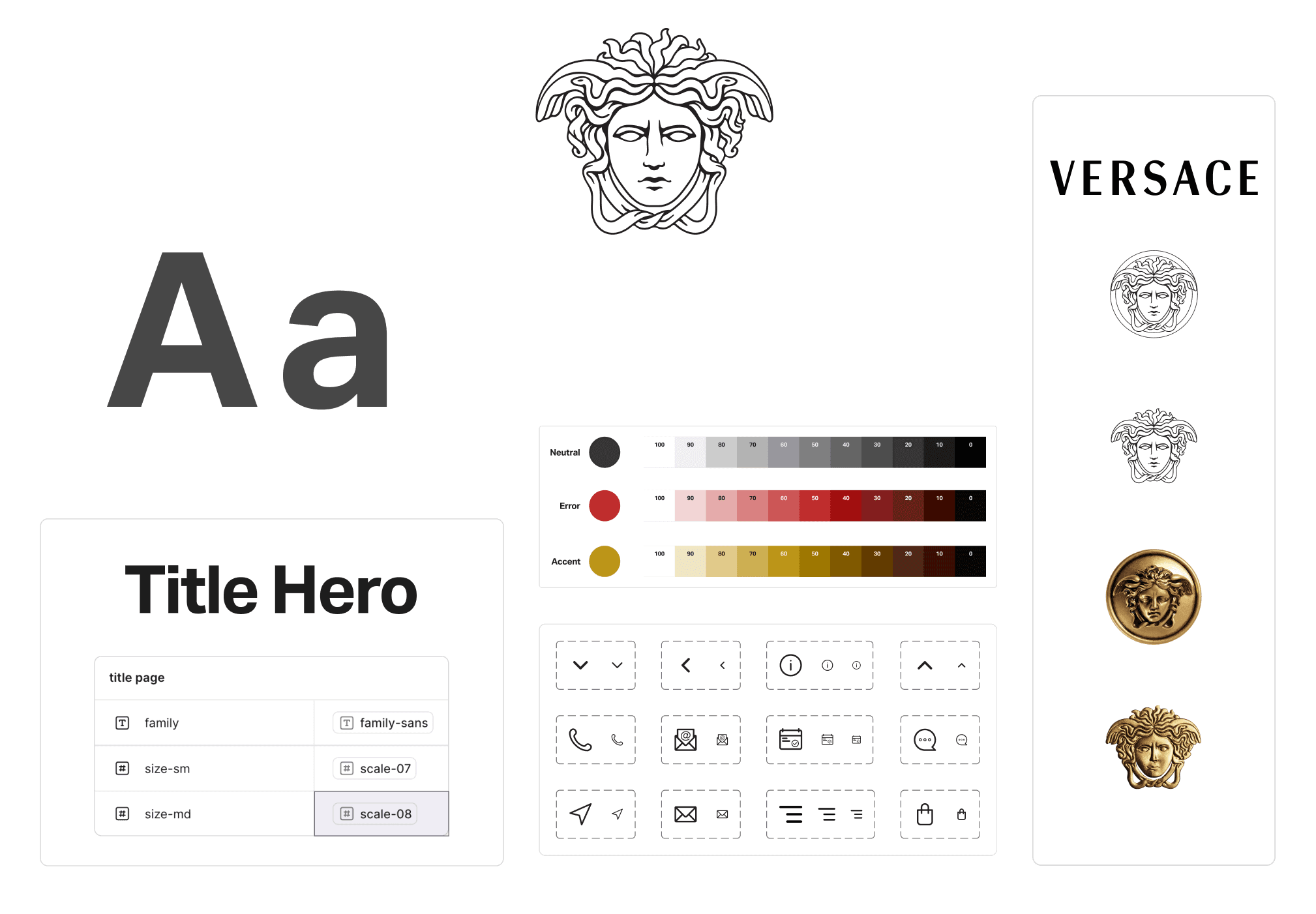
I. target audience
This project aims at satisfying the needs of several target groups:
II. approach
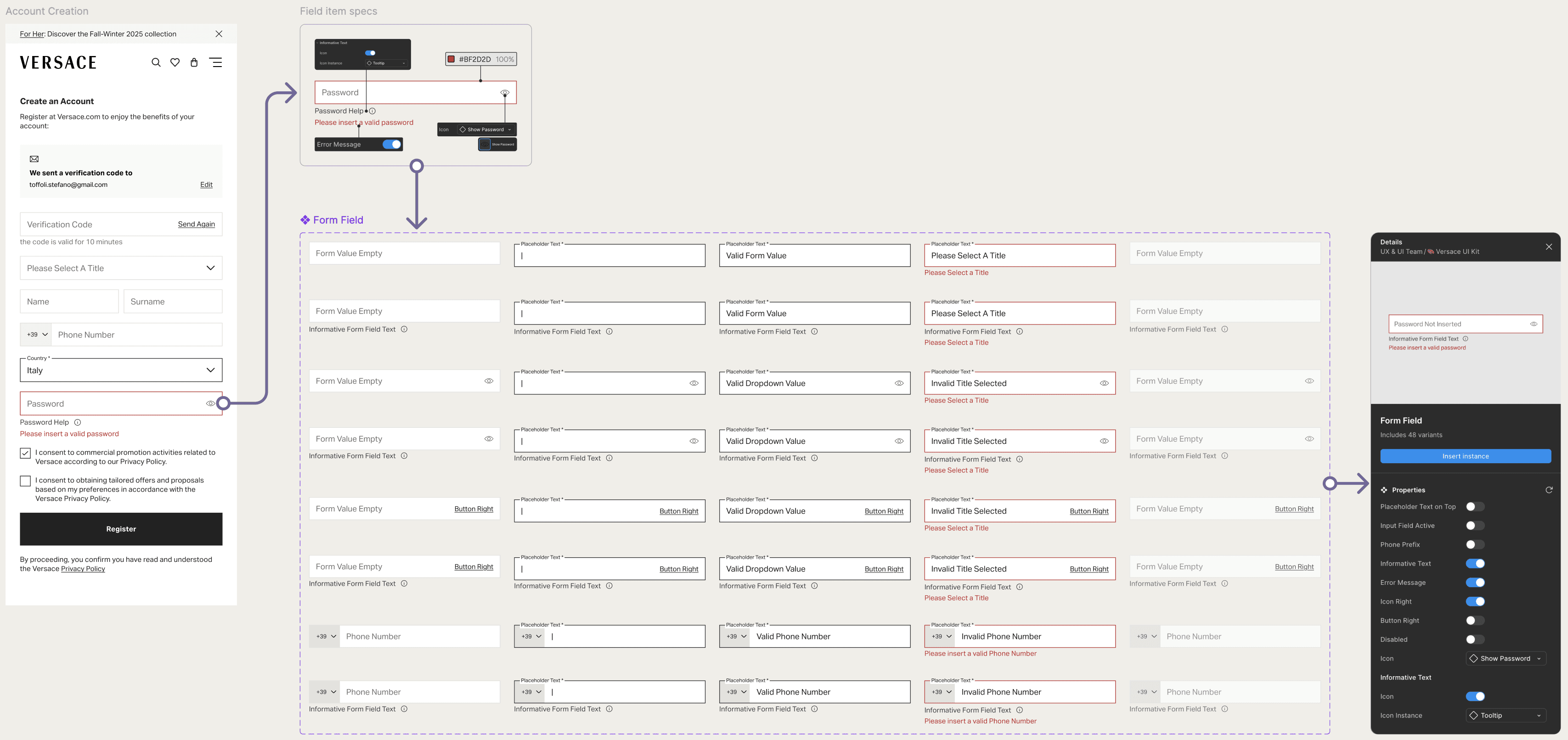
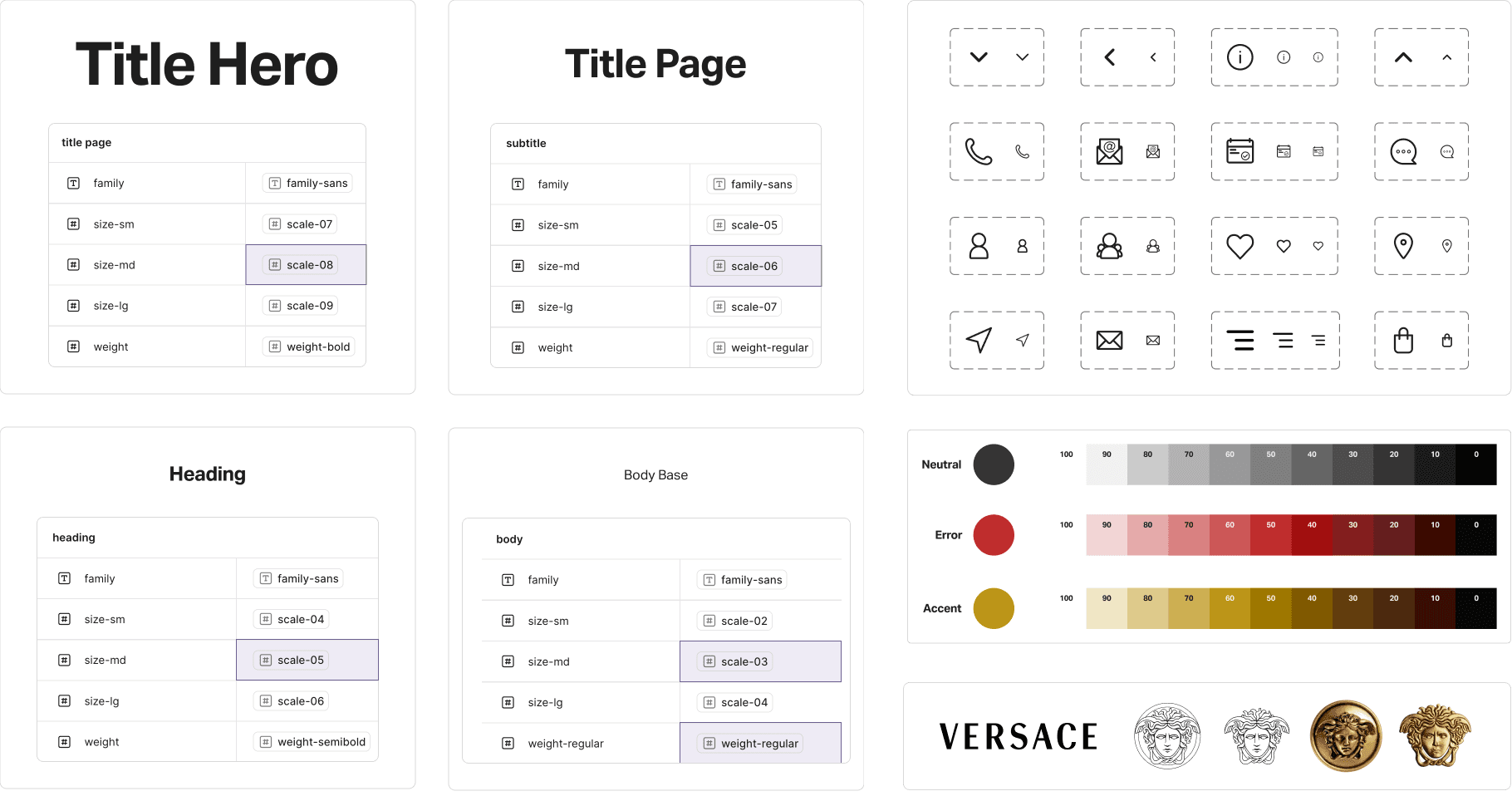
Due to a lack of time allocation for this project, I had to use the smartest approach I could find. I started by laying down basic styles (tokens) in my "free" time at work. When a new request came, I started building basic and nested components to build what was needed. After delivery I took the new components and moved them into a tidy new file. I reached out to developers to understand how they structured their codebase from a tokens perspective, to make sure design and code are aligned.
III. design tokens
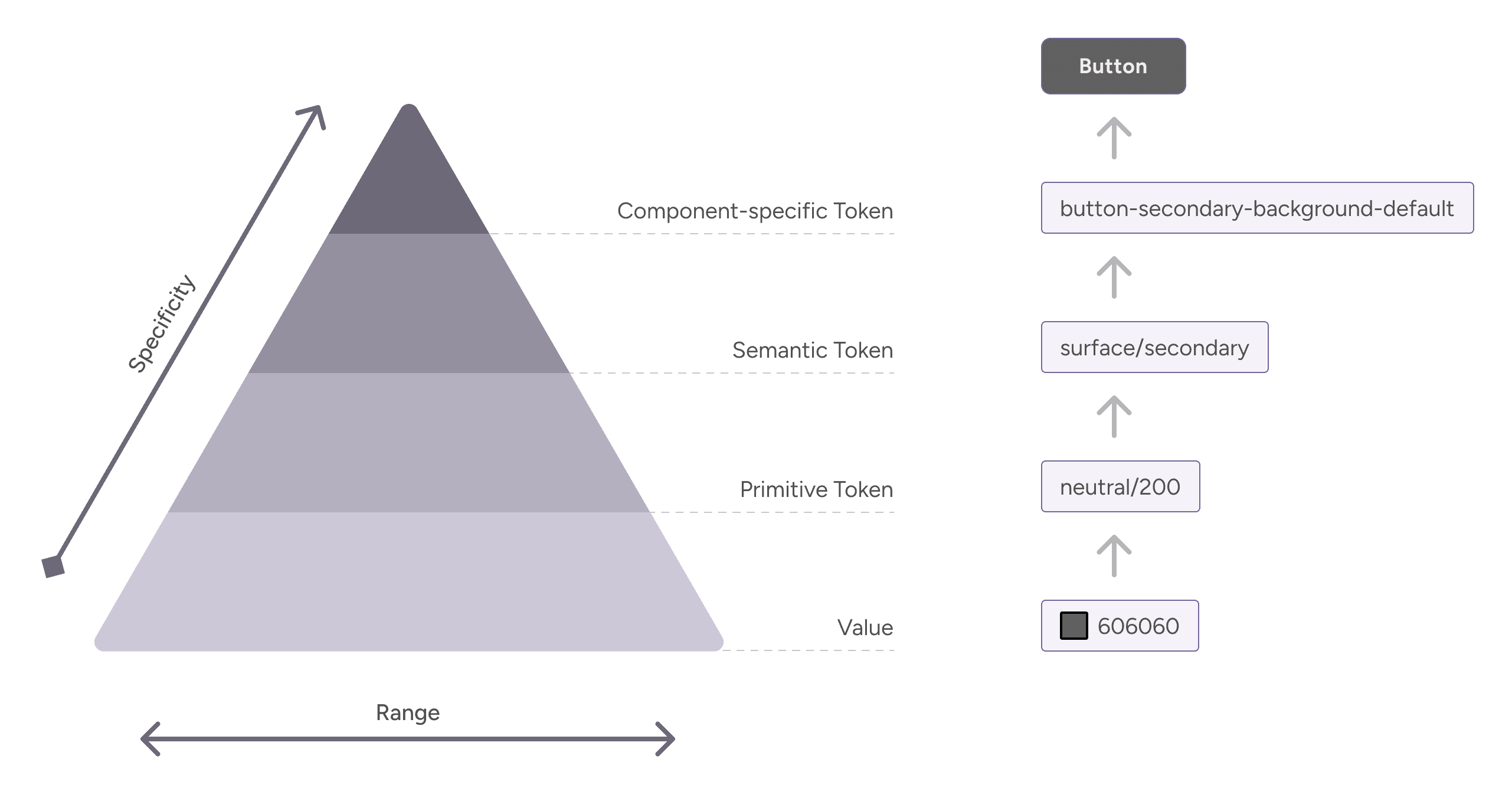
After having to change a single color on each form variation, I realized it was time to use design tokens: starting by a raw value (such as a HEX colour), this gets associated to a primitive token, which is the foundation for other tokens to build from. We also have semantic tokens, which give an indication of the general use of the token, and finally component-specific tokens.
IV. variables set
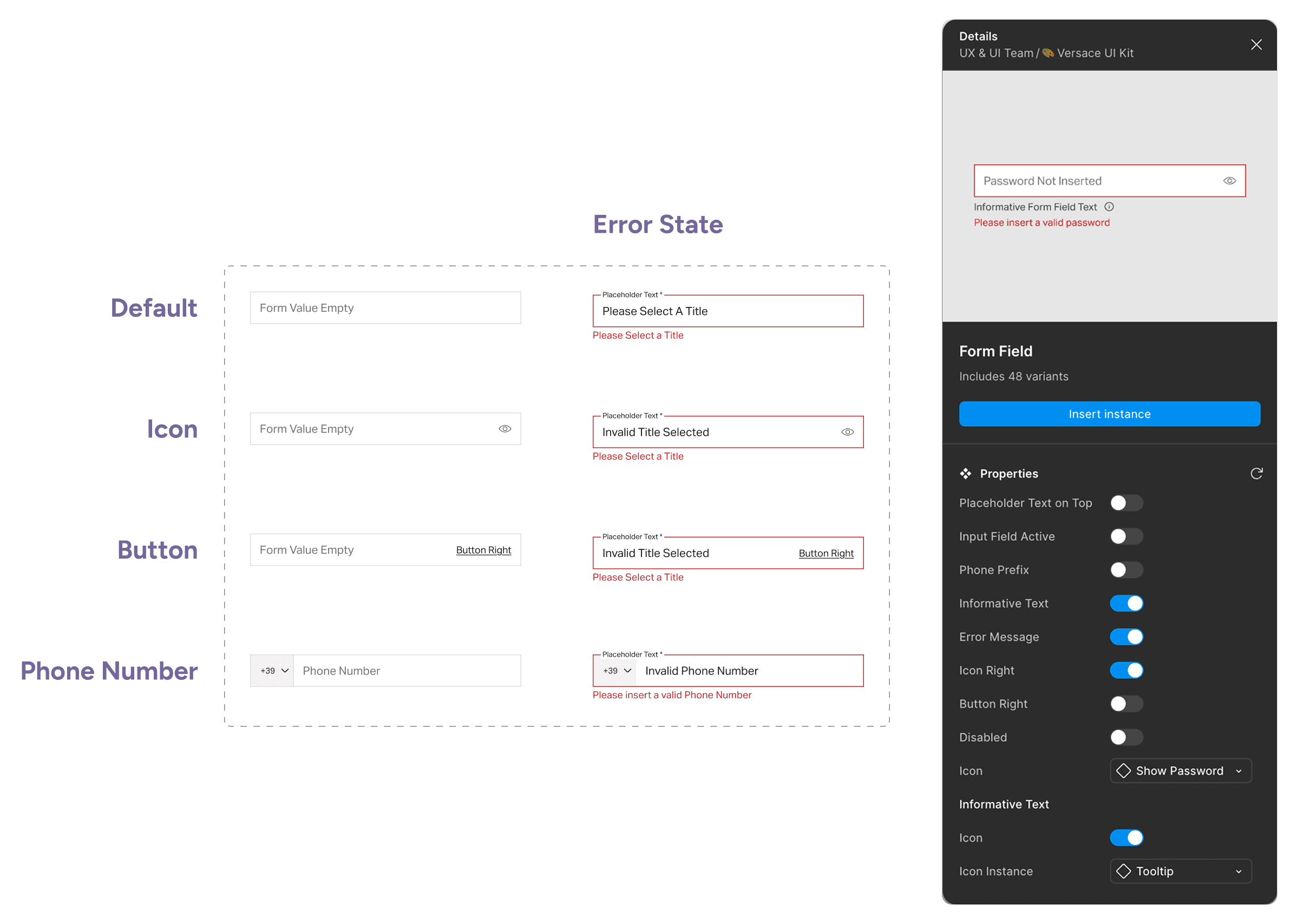
Components can now be easily tweaked based on the context needed, via toggles, dropdowns, and text fields for specific components. This makes error-proof also the work of non-designers inside the company.
V. accessibility check
Making each component accessible is a must. The reference when designing is the Web Content Accessibility Guidelines (WCAG2) and A11y. This way we make sure that we embrace inclusivity. We (and third parties services, too) perform constant accessiblity checks on color contrast, screen reader and keyboard accessibilty.

Colour Contrast
Keyboard Functionalities
Focus Element
Screen Reader
VI. delivery
After business and technical user story signoff, devs work begin. I delivered a Figma project file, with artboards divided for each story. This was a request from devs to facilitate the QA work. Once the developed component is ready we start testing it - Jira tickets are used for both bug reporting and user stories.
VII. metrics
KPIs are constantly monitored, even after releases. Here’s the most interesting ones:
-50%
development error rate
By developers. They do save a bunch of time since they do not spend time anymore searching for tokens or deciding how to build components.
+99%
satisfaction
Especially by Merchandisers, who stated to be impressed by how much time they can now save while requesting new campaigns.